Skip to content

You Don’t Need the Wilderness to Learn Bushcraft
Most people think bushcraft only happens deep in the wilderness. I used to believe that too, until I realized how many core skills I was ignoring because I felt I needed to be in a forest to practice them.
Here’s the surprising stat that changed my mindset: over 70% of survival failures come from poor preparation, not extreme conditions. That hit home. So I started training where I could, in the safety of my backyard. And honestly? That’s where real skill-building happens.
In this guide, I’m breaking down 9 more bushcraft skills to learn without leaving home. These aren’t beginner fluff skills either. They’re practical, confidence-building techniques that sharpen your awareness, improve self-reliance, and translate directly to real-world outdoor survival. If you want to level up your bushcraft knowledge without waiting for the “perfect” trip, this is where you start.
Natural Cordage Making Using Backyard Materials
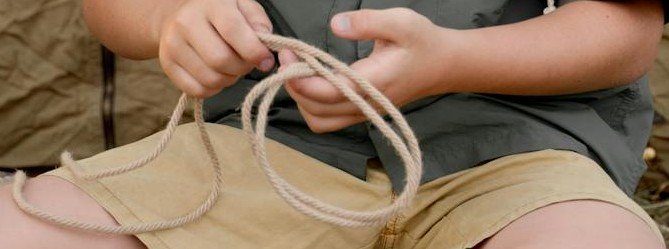
I still remember the first time I realized I could make usable cordage without buying anything. I was in my backyard, messing around with plant fibers, thinking, “There’s no way this is going to work.” Spoiler: it didn’t at first. But after enough snapped strands and sore fingers, it started to click, and now it’s one of those bushcraft skills I keep coming back to.
Identifying common backyard plants suitable for cordage
At first, I thought any plant that looked fibrous would work. That assumption was wrong. Through trial and error, I learned that plants like milkweed, dogbane, nettle, cattail, and even long grasses are reliable for cordage. Milkweed quickly became a favorite because the inner bast fibers are strong once dried. I used to walk past these plants for years, not knowing they were basically free rope just waiting to be harvested.
Harvesting fibers without killing the plant
I made the classic beginner mistake of pulling plants out by the roots. It felt efficient at the time, but it’s not sustainable. Now I cut stalks a few inches above the ground so the plant can regrow. With trees like willow, only thin vertical strips of bark are removed. Girdling a tree will kill it, and yeah, that lesson stuck with me after I realized what I almost did.
Processing techniques for bark, grasses, and plant stems
Processing is where patience matters most. Bark fibers are usually soaked in water for several days so the outer layers rot away, a process known as retting. It smells terrible, just a warning. Grasses and stems are dried first, then crushed and split by hand to release the fibers. Rushing this step leads to weak cordage, and I learned that the hard way after my first few strands fell apart mid-twist.
Twisting, reverse-wrapping, and strengthening cordage
This part finally feels rewarding. I twist fibers by rolling them against my thigh, then reverse-wrap two strands together so they lock under tension. If both strands are twisted the same way, the cordage will unravel. That mistake was made more than once. Slightly damp fibers tend to grip better, and that small detail made a big difference in strength.
Testing cordage strength for bushcraft applications
I used to skip testing, which was a bad call. Now I pull the cordage steadily and tie basic knots to see if it slips. If it holds weight for tasks like hanging gear or securing a tarp, it’s good enough for field use. One failed shelter line in the middle of the night was all it took to make testing a habit.
Natural cordage isn’t perfect, and it doesn’t have to be. The skill grows with practice, and every mistake teaches you something useful to build on.
I’ll admit it, I used to rely way too hard on GPS. Phone, handheld unit, whatever I had. Then one day, the battery died faster than expected, and I had that quiet “uh-oh” moment standing in the woods pretending I wasn’t slightly lost. That was the push I needed to actually learn primitive navigation skills, and honestly, practicing them in my own backyard changed everything.
Using the sun for direction during different times of day
Everyone says “the sun rises in the east and sets in the west,” but that advice is only sort of helpful. What I didn’t realize at first was how much the sun’s angle changes throughout the day. In the morning, shadows are long and stretch west. Around midday, the sun is at its highest, and shadows shrink. By late afternoon, shadows stretch east. I messed this up early on by assuming noon meant straight overhead, which isn’t always true depending on latitude and season. Once I started paying attention daily, determining direction became easier without overthinking it.
The stick-shadow method sounded gimmicky until I actually tried it. You stick a straight branch in the ground, mark the tip of the shadow, wait 15 to 20 minutes, then mark it again. The first mark is west, the second is east. Draw a line between them, and boom, you’ve got east-west. The first few times, I rushed it and got sloppy results. Patience matters here, and yeah, that lesson was learned the boring way.
Night navigation used to intimidate me. Stars all looked the same at first. But once I learned to find the North Star using the Big Dipper, it stopped feeling mystical and started feeling practical. Polaris barely moves, so it’s reliable. I practiced this in my backyard, just standing there staring up, but it worked. Over time, I learned to recognize other constellations instead of just seeing random stars, and confidence followed.
Terrain association and landmark awareness
This is the skill I underestimated the most. Terrain association means reading the land like a story. Hills, drainage dips, tree lines, fence lines, and even changes in vegetation all tell you where you are. Early on, I ignored landmarks and walked on autopilot. Now I constantly note “that big oak,” “that low spot,” or “that bend in the path.” It sounds simple, but it keeps you oriented without tools.
Why backyard practice improves confidence in the field
Practicing in the backyard feels silly until you realize mistakes are safe there. No pressure, no risk. I got lost on purpose a few times, then navigated back using only shadows or landmarks. That confidence carries into the field. When things go sideways out there, panic is reduced because you’ve already failed in a safe place and learned from it.
Primitive navigation isn’t about ditching technology. It’s about not being helpless without it. Once that clicks, everything feels calmer.
Camp Hygiene & Sanitation Planning at Home
Camp hygiene wasn’t the exciting skill that pulled me into bushcraft. Fire, shelters, knots, sure. Sanitation felt boring until I got sick once after a short trip and couldn’t figure out why. That frustration sent me down a rabbit hole, and weirdly enough, practicing sanitation planning at home ended up making every outdoor trip smoother and safer.
Designing a safe camp sanitation layout in small spaces
When I first tried laying out a “camp” in my backyard, I realized how cramped real campsites can feel. Even small spaces need separation. Cooking area, sleeping area, and waste area should never overlap. I used to set things up wherever was convenient, which is a bad habit. Now I mentally map zones, even at home. My rule became simple: food upwind, waste downhill, sleeping in between. It sounds obvious, but it wasn’t until I messed it up once.
Waste disposal principles that prevent illness
This part gets ignored way too often. Human waste needs distance, depth, and discretion. I practiced digging proper catholes at home using a trowel, aiming for 6 to 8 inches deep. Too shallow and it becomes a contamination problem. Too deep and decomposition slows. I didn’t believe that until I read more and tested soil types myself. Handwashing afterward matters more than people think, and yeah, skipping it once could teach you a bad lesson fast.
Greywater management techniques
Greywater was something I didn’t even think about at first. Dishwater, handwashing water, all of it adds up. Dumping it in one spot creates a smell and attracts bugs. I learned to scatter greywater over a wide area, away from camp and water sources. Use a strainer to catch food particles first. That one habit reduces wildlife interest more than anything else I tried.
Practicing hygiene routines that scale to wilderness camps
Practicing at home will help you build routines instead of rules. Washing hands before food prep, after waste handling, and before sleep became automatic. I tested minimalist setups, like using a small water bottle and biodegradable soap. Some routines felt awkward at first, but repetition fixed that. In the field, habits beat memory every time. If you practice it at home, it shows up naturally outdoors.
Common sanitation mistakes beginners make
I’ve made most of them. Setting up camp too close to water. Forgetting where the waste area is. Reusing dirty utensils because “it looks clean enough.” The biggest mistake is assuming short trips don’t need sanitation planning. Illness doesn’t care how long you’re out there. That was a humbling realization.
Camp hygiene isn’t glamorous, but it’s foundational. Once you practice it at home, it stops feeling like extra work and becomes common sense.
Weather Reading & Micro-Forecasting Skills
Weather reading was one of those skills I used to overestimate. I’d check a forecast, see a little sun icon, and assume I was good to go. Then I got caught in a surprise storm that wasn’t really a surprise at all, just something I didn’t know how to read yet. That experience pushed me into learning micro-forecasting, and most of that learning happened right at home, staring at the sky more than I probably should’ve.
Observing cloud types and movement patterns
At first, clouds all looked the same to me. White, gray, moving… that was about it. Once I slowed down and paid attention, patterns started showing up. High, wispy cirrus clouds usually indicate that the weather will change within a day. Puffy cumulus clouds are generally fair weather until they start stacking vertically. I ignored that stacking once and paid for it with a soaked pack later. Watching how fast clouds move matters too. Fast movement at high altitude often signals strong winds and incoming systems.
Reading wind shifts and temperature changes
Wind is a loud hint if you listen. I used to ignore subtle shifts because they didn’t feel dramatic. But a steady breeze switching direction over an hour usually means something is changing. Temperature drops combined with rising wind made me uneasy at first, but now they’re a warning sign I respect. I started checking temps manually in the backyard morning and evening, and the trends told me more than any single number.
Identifying pressure changes using natural indicators
I don’t carry a barometer everywhere, so I learned to notice indirect clues to air pressure. Birds flying lower, insects disappearing, and smoke from a fire dropping instead of rising are all signs that air pressure is falling. I once brushed these off as coincidences. It wasn’t. My notes proved patterns repeat. Even my joints felt stiff before storms, which I laughed at, but it turned out to be consistent.
Backyard journaling for weather pattern recognition
Journaling felt excessive until it worked. I kept a simple notebook and wrote down cloud type, wind direction, temperature, and what actually happened later. No fancy gear. Over time, I started predicting short-term weather with surprising accuracy. That confidence wasn’t instant, but it was earned. Patterns become obvious when you see them written out.
How micro-forecasting improves trip safety
Micro-forecasting doesn’t replace official forecasts; it sharpens them. Knowing when to reinforce a shelter, delay a hike, or pack rain gear has a real safety impact. I’ve avoided bad situations simply by trusting what I observed locally. That kind of awareness reduces panic when conditions change. Calm decision-making is half the battle of staying safe out there.
Weather doesn’t need to be mysterious. It just needs attention.
Primitive Traps & Trigger Systems (Practice Builds Precision)
Primitive traps were one of those skills I was excited about for all the wrong reasons at first. I wanted the cool factor without respecting the responsibility. That changed after I realized how easy it is to do this stuff poorly, or worse, unsafely. Backyard practice slowed me down in a good way, and it taught me that precision matters more than creativity when it comes to trigger systems.
Understanding trap ethics and legality before practicing
This is the unskippable part, even though beginners love to skip it. I sure did. Trapping laws vary wildly by location, and many primitive traps are illegal for actual use. Practicing mechanics is fine, but deploying them on animals often isn’t. Once I wrapped my head around that, my focus shifted to ethics: clean function, no suffering, and zero “just testing it out” behavior. Backyard builds stayed non-functional for animals and strictly mechanical, and honestly, that made learning easier.
Learning trigger mechanics using sticks and cordage
Triggers look simple until you try to make one that actually works. The first few I built either fell apart instantly or wouldn’t release at all. Trigger mechanics are about balance and friction, not force. Using ordinary sticks and natural cordage helped me feel where tension was being lost. I learned more from watching a trigger fail slowly than from one snapping cleanly. Those failures were useful information.
Building figure-four and toggle triggers with scrap materials
Figure-four triggers taught me humility. Every angle matters. If one notch is off, the whole thing is junk. I practiced with scrap wood, chopsticks, and even old paint stirrers. Toggle triggers were easier at first, but consistency was harder. Backyard builds let me rebuild the same trigger ten times in a row, tweaking tiny details each time. That repetition is where precision sneaks up on you.
Improving fine motor skills through repetition
This surprised me the most. Building triggers sharpened my hands. Cutting clean notches, tying tight cordage wraps, adjusting tension by millimeters, it all adds up. Early on, my hands shook when things got delicate. Over time, movements became automatic. That muscle memory transfers to knots, carving, and tool control. It’s slow progress, but it sticks.
Why backyard builds lead to cleaner field setups
The backyard removes pressure. No cold hands, no fading light, no rush. Mistakes are cheap. By the time I took those skills into the field, my setups were faster and cleaner. Less fumbling, fewer adjustments, better judgment. Practicing at home turned complexity into routine. And routine is what keeps mistakes from happening when conditions aren’t ideal.
Primitive trap systems aren’t about catching something. They’re about understanding mechanics, responsibility, and control. Backyard practice makes that clear real fast.
Snare Construction and Placement Concepts
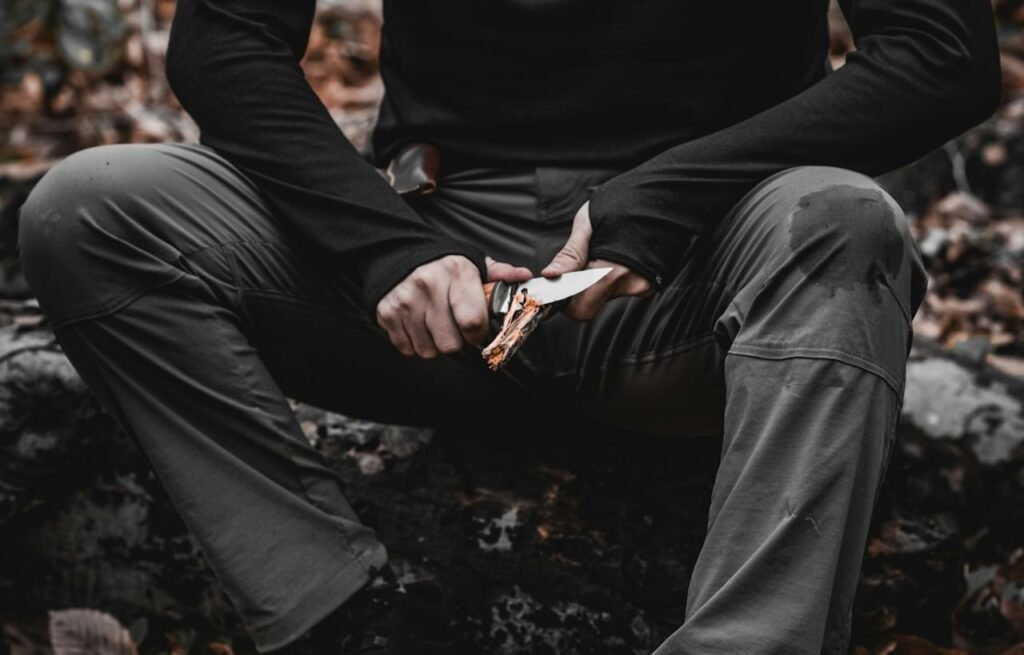
Snares were one of those skills that humbled me fast. I thought they were just loops on a line, simple stuff. Turns out, they’re all about nuance. The first few I built either collapsed, stayed wide open, or snagged on nothing at all. Backyard practice saved me from learning those lessons the hard way later, and it shifted my mindset from “catching” to understanding how movement, tension, and placement actually work.
Materials suitable for safe practice snares
When I started, I avoided metal wire altogether. For practice, paracord inner strands, jute twine, bank line, and even thick string worked fine. These materials behave differently, which is the point. Jute kinks easily, paracord holds its shape longer, and bank line slides more smoothly. Using non-lethal materials kept things ethical and legal, and it let me focus on mechanics instead of consequences. That boundary mattered more than I expected.
Loop sizing and tension fundamentals
Loop size was where I kept messing up. Too big and it’s sloppy. Too small and it never engages. I practiced forming consistent loops using my fist as a rough gauge, then adjusted from there. Tension matters just as much as size. A loop that doesn’t close smoothly is basically decoration. I learned to test by pulling the loop slowly and watching for hesitation. Any hitch or snag meant rebuilding.
Simulating animal pathways without harming wildlife
This part felt awkward at first, but it worked. I simulated animal paths using narrow gaps between chairs, fence posts, or stacked sticks. I even dragged a weighted bottle through the loop to mimic movement. No animals involved, no risk. It looked ridiculous, but it showed me how subtle changes in height or angle affected engagement. Backyard setups make experimentation safe, and mistakes are allowed there.
Understanding snare placement logic
Placement logic clicked once I stopped thinking about animals and started thinking about behavior. Animals follow edges, funnels, and least-resistance paths. I practiced setting loops where movement was naturally guided rather than forced. Even in the backyard, pathways exist. Corners, gaps, transitions. Once you see them, you can’t unsee them. That awareness carries straight into the field.
Translating practice builds to real-world applications
Here’s the thing: practice snares aren’t field snares, and that’s okay. What transfers is understanding. Loop control, anchor points, tension balance, and placement logic all translate cleanly. Legal and ethical considerations always come first in real-world use, and those vary by location. Backyard builds gave me confidence without pressure. When skills are learned slowly and responsibly, they stick.
Snare work isn’t about shortcuts. It’s about precision, restraint, and reading movement. Practicing that at home builds judgment, not just skill.
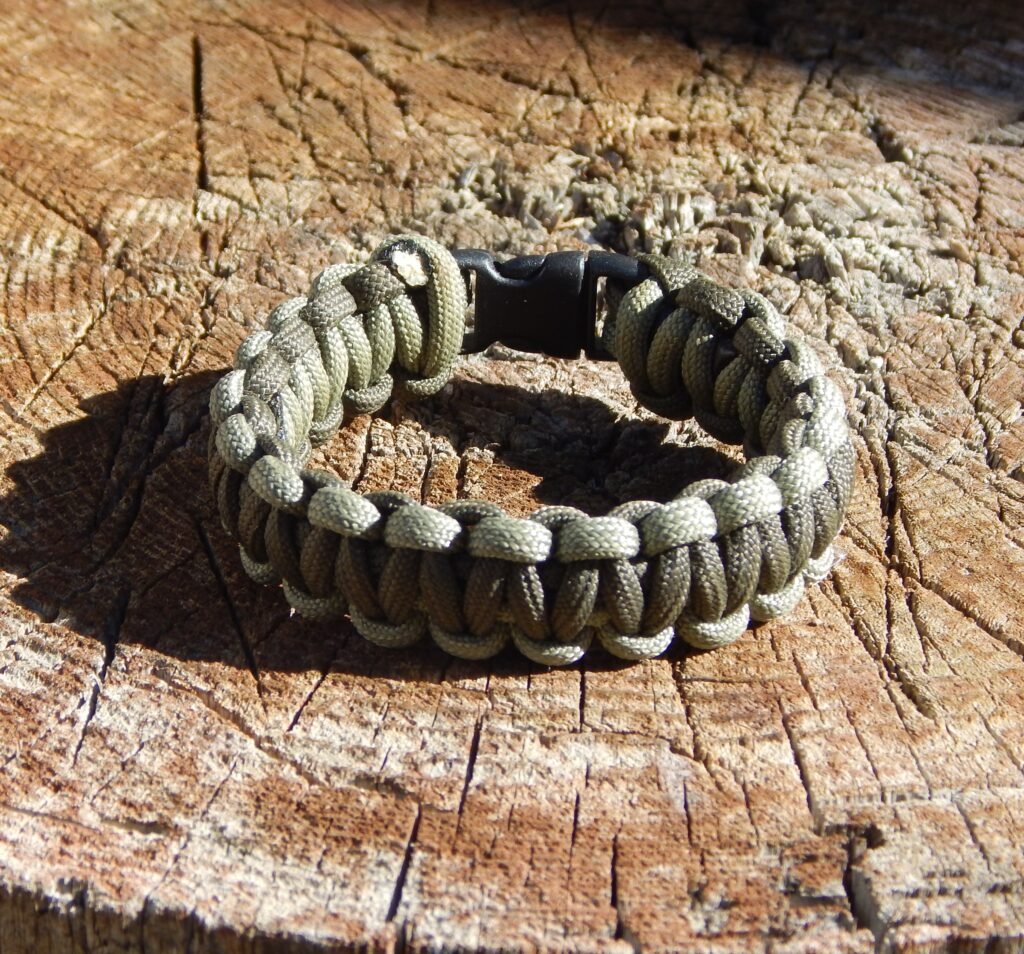
Bonus Tip: When I made my paracord bracelet. I put a length of brass wire inside it. That way, I have rope and snare wire with me at all times.
Signal Awareness and Visual Communication
Signal awareness was a skill I ignored way longer than I should have. I figured signals were only for emergencies, and emergencies were things that happened to other people. That confidence faded after I realized how easy it is to become invisible, even when help is technically nearby. Practicing signaling at home made me realize how much energy gets wasted doing it wrong, and how small tweaks make a massive difference.
Identifying natural signal locations around your property
The first lesson was location beats effort every time. I used to practice signals in random spots without thinking. Then I started walking my property and looking at it like a searcher would. High points, open sight lines, clearings, and edges where contrast naturally exists stood out fast. A signal placed low or surrounded by clutter gets swallowed visually. That mistake was made more than once before it finally clicked.
Practicing mirror, smoke, and ground signal concepts
Mirrors surprised me the most. I assumed they were tricky, but once you learn to flash using two fingers as a sighting frame, it becomes repeatable. Smoke signals were practiced conceptually only, no actual fires, but understanding column shape and background mattered. Ground signals were the easiest to overlook. I laid out large shapes using rocks and sticks and realized anything under six feet across is basically useless from the air. Bigger really is better here.
Learning contrast and visibility principles
Contrast is everything. White on snow disappears. Dark shapes in shadows vanish. I tested this by laying the same signal on grass, gravel, dirt, and snow. The difference was wild. Straight lines read better than curves. Sharp angles stand out faster than organic shapes. I used to focus on symbol meaning, but visibility matters more than perfection. A sloppy, high-contrast signal beats a perfect one no one sees.
Day vs. night signaling considerations
Day signaling relies on reflection and contrast. Night signaling is about motion and rhythm. I practiced flashlight signaling patterns and realized steady light gets ignored, while movement grabs attention. At night, even small elevation changes matter. A light held higher travels farther. I didn’t believe that until I tested it myself. Batteries were drained fast when I did it wrong, which was a good lesson.
Why signal awareness saves energy and lives
The biggest takeaway was efficiency. Panic makes people overwork signals. Better placement, better contrast, and better timing reduce effort. That matters when energy is limited. Signal awareness also reduces decision fatigue. You already know where to go and what to do. That calm saves lives. I didn’t fully understand that until I practiced it intentionally.
Signals aren’t about desperation. They’re about clarity. And clarity starts with awareness.
Camp Cooking Skills & Bushcraft Cooking Tools
Camp cooking was where theory finally met reality for me. I thought I understood it because I could cook indoors just fine. Turns out, removing a stove, steady heat, and proper tools expose every weak spot fast. Backyard practice became my testing ground, and yeah, a few meals were borderline inedible before things started making sense.
Core bushcraft cooking principles you can practice at home
The biggest principle I learned early is simplicity wins. Fewer ingredients, fewer steps, fewer tools. I used to overcomplicate meals, which just led to stress and wasted fuel. Practicing at home helped me focus on timing, heat awareness, and sequencing instead of fancy recipes. If a meal can’t survive disruption, it doesn’t belong in camp cooking.
Understanding fire control and heat management for cooking
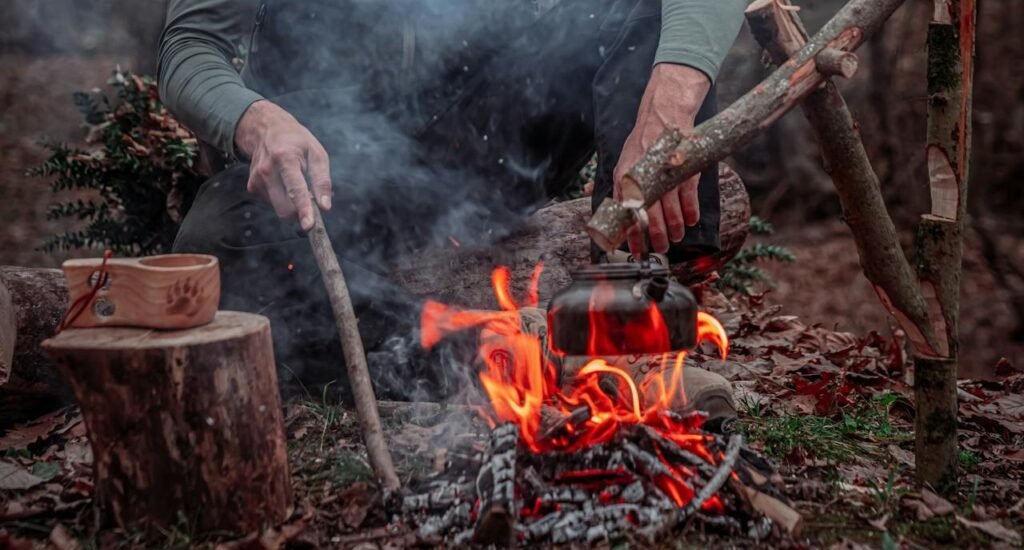
Fire control is everything, and it’s way harder than it looks. My first mistake was cooking directly over flames instead of coals. Food burned outside and stayed raw on the inside. Once I started letting wood burn down into coals, results improved instantly. I practiced adjusting pot height and coal spread in the backyard, and that hands-on control taught me more than any guide ever did.
Simple bushcraft cooking methods (roasting, boiling, baking)
Roasting felt intuitive, but was easy to mess up. Too close to the heat and food scorches. Boiling was forgiving, but fuel-hungry. Baking surprised me the most. I practiced dirt ovens and coal-covered pots, and failed more than once. Timing matters, and patience matters more. Backyard attempts saved me from disappointment later in the field.
Making and using basic camp cooking tools
Tool-making was frustrating at first. My first spatula snapped. My first pot hanger slipped. But every failure showed me what worked and what didn’t. Simple tools made from green wood held up better than those made from dry wood. That detail was learned the hard way. Practicing tool use at home made adjustments painless instead of stressful.
Pot hangers, grills, skewers, and simple eating utensils
Pot hangers taught me about balance and load distribution. Grills needed just the right spacing, or the food would fall through. Skewers worked best when sharpened slowly, not hacked into shape. Eating utensils were easy but surprisingly important. Burning your fingers ruins a meal fast. Backyard builds let me test comfort and durability without consequences.
Bonus tip: Split a green branch down the middle, but not all the way through. Wrap cordage below the split to prevent it from splitting further. Then place a wedge into the bottom of the split to keep the halves open. You now have some tongs.
Selecting safe, food-grade natural materials
This part doesn’t get enough attention. Not all wood is food-safe. I learned to avoid resinous woods like pine and anything with strong odors. Hardwoods like maple and birch worked better. That lesson came after one meal tasted like sap. Not pleasant. Knowing material safety matters just as much as cooking skills.
Practicing efficient meal prep with minimal gear
Efficiency came from repetition. One-pot meals, staged prep, and pre-measured ingredients saved time and fuel. I practiced packing everything I needed on a small tray and pretending that was all I had. That constraint forced smarter choices. Waste dropped, stress dropped, and meals got better.
How backyard cooking builds confidence for real camps
Backyard cooking removes pressure. If something fails, you learn instead of panicking. Confidence comes from knowing you’ve burned food before and survived it. That calm translates directly to real camps. When you trust your skills, cooking becomes enjoyable again.
Camp cooking isn’t about gourmet meals. It’s about control, awareness, and practice. Backyard mistakes make field success possible.
Improvised Repairs & Field Fixes Using What You Have
Improvised repairs were never something I planned to practice. They just happened to me. A torn strap here, a cracked tent pole there, and suddenly the trip shifts from fun to problem-solving mode. After enough of those moments, I started practicing repairs on purpose at home, and that changed how I approached gear and bushcraft altogether.
Repairing gear with minimal tools
I used to assume repairs required the “right” tool. That mindset slowed me down. Practicing with just a knife and cordage forced creativity. I learned how much you can do by rerouting stress instead of fixing damage directly. Shortening a strap, redistributing load, or changing how something hangs often solves the problem without fancy fixes. Those lessons were learned after fighting gear that didn’t want to cooperate.
Improvising fasteners, patches, and bindings
Fasteners became my obsession for a while. Sticks, wire, cordage fibers, and even carved toggles all got tested. Patches were improvised using cloth scraps, bark, and tape substitutes. Bindings mattered more than materials. A bad wrap fails regardless of what you use. I practiced square lashings, clove hitches, and constrictor knots until they became automatic. That repetition paid off later.
Practicing shelter and gear fixes under time limits
Time pressure changes everything. I practiced setting timers and forcing myself to fix problems quickly. A broken tarp tie-out, a sagging ridgeline, a leaning shelter pole. At first, panic crept in. Over time, calm replaced it. Practicing under mild stress made real problems feel manageable. That shift was noticeable.
Problem-solving under constraint scenarios
Constraints sharpen thinking. I practiced with rules like “no cordage” or “one tool only.” Those games exposed habits and blind spots. Sometimes the fix wasn’t obvious until I stepped back. That small pause mattered. The best solutions were often simpler than my first idea. Complexity was usually a sign that I was overthinking.
Why adaptability is the ultimate bushcraft skill
Adaptability ties everything together. Skills don’t matter if you freeze when plans change. Improvised repairs taught me flexibility and confidence. When gear fails, it’s not a crisis, it’s a puzzle. That mindset saves energy and morale. And morale, more than gear, keeps you moving forward.
Field fixes aren’t about perfection. They’re about function. Practice turns uncertainty into calm problem-solving.
9 More Bushcraft Skills to Learn for Enhanced Survival
Bushcraft isn’t about escaping civilization; it’s about building capability wherever you are. By practicing these nine bushcraft skills in your backyard, you remove excuses and replace them with real experience.
Every cord you twist, tool you carve, or weather pattern you track builds confidence that carries into the wild. Start small. Practice often. And when you finally step into the backcountry, you won’t be guessing, you’ll be ready. Pick one skill this week and start practicing today.
9 More Backyard Bushcraft Skills to Learn: Key Takeaways
- Bushcraft skills can be effectively learned and refined at home, without wilderness access, reducing risk while accelerating real skill development.
- Over 70% of survival failures stem from poor preparation, making backyard training one of the most effective ways to build readiness.
- Natural cordage making teaches plant identification, sustainable harvesting, fiber processing, and strength testing using common backyard materials.
- Primitive navigation skills—including sun direction, shadow methods, star navigation, and terrain association—can be safely practiced in familiar environments to build confidence.
- Camp hygiene and sanitation planning is a foundational bushcraft skill that prevents illness through proper waste management, greywater dispersal, and hygiene routines.
- Weather reading and micro-forecasting improve decision-making by training observation of clouds, wind shifts, pressure indicators, and local patterns.
- Primitive trap and trigger systems develop fine motor control, mechanical understanding, and ethical judgment when practiced legally and non-functionally.
- Snare construction concepts teach loop control, tension, placement logic, and movement awareness without harming wildlife when practiced responsibly.
- Signal awareness and visual communication improve rescue visibility by emphasizing contrast, placement, size, and day-vs-night signaling principles.
- Camp cooking skills build fire control, heat management, tool making, and efficient meal preparation using minimal equipment.
- Improvised repairs and field fixes train adaptability, problem-solving, and calm decision-making when gear fails or conditions change.
- Backyard practice allows safe failure, repetition, and refinement—turning mistakes into muscle memory without real-world consequences.
- Consistent home practice builds confidence, adaptability, and judgment, which directly transfer to wilderness and emergency situations.
Bottom Line:
Real bushcraft skill is built through deliberate practice, repetition, and problem-solving, not location. Training in your backyard removes excuses, sharpens fundamentals, and prepares you for real-world survival long before you ever step into the backcountry.
FAQ Section
Can bushcraft skills really be practiced in a backyard?
In many cases, a backyard is the best place to start. Skills like cordage making, navigation, tool carving, sanitation planning, and weather reading rely more on repetition and observation than location. Practicing at home removes pressure and allows you to focus on technique instead of survival stress.
Are primitive traps and snares legal to practice at home?
Building traps and snares for educational purposes only is generally allowed, but laws vary by region. You should never set traps that could harm wildlife or pets. The safest approach is practicing trigger mechanics and construction without deploying them, which still builds essential skills.
What’s the most important bushcraft skill to learn first?
Situational awareness. Skills like weather reading, navigation, and signal awareness directly affect safety and decision-making. Once awareness improves, technical skills like cordage making and tool crafting become far more effective and intuitive.
How much time do I need to practice bushcraft skills at home?
Even 15–30 minutes a few times a week is enough to see real improvement. Bushcraft is about consistency, not marathon sessions. Small, focused practice sessions compound quickly over time.
Do backyard bushcraft skills actually transfer to real wilderness situations?
The wilderness doesn’t change the principles; only the environment does. Someone who has practiced knots, tools, navigation, and repairs at home will perform faster and with more confidence in the field than someone learning under pressure for the first time.
Disclaimer: This blog post contains affiliate links